Extreme Heat and BC Seniors: A Family Preparedness Checklist
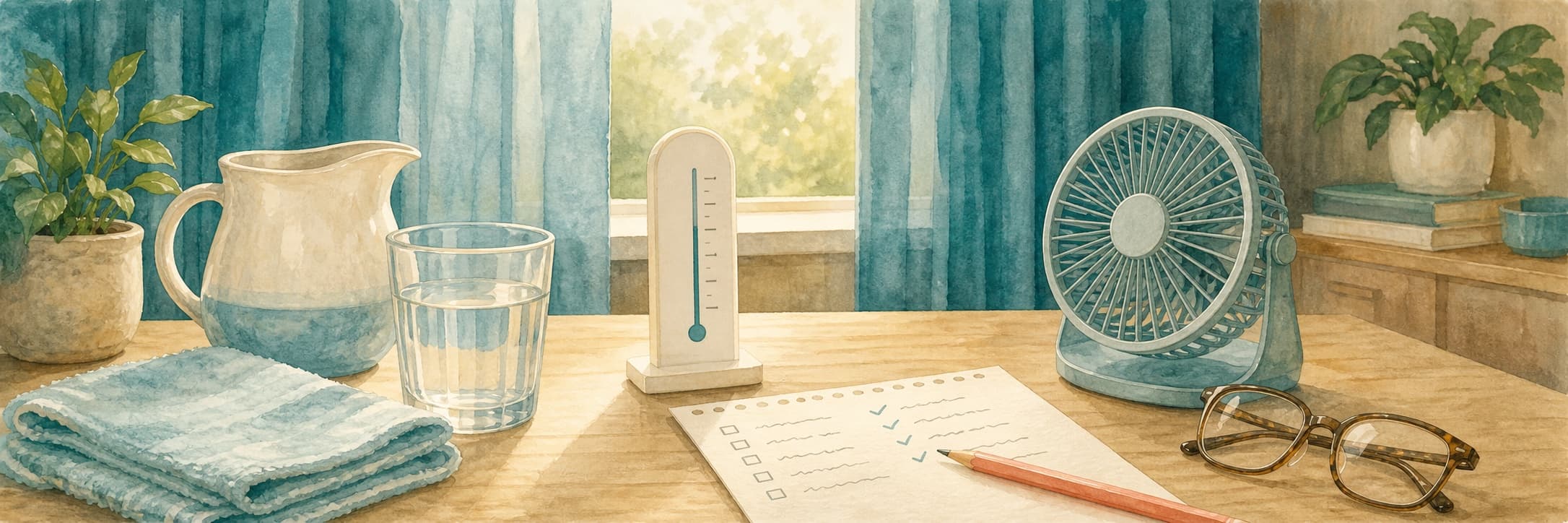
Extreme heat can become dangerous quickly for an older adult, especially when a home stays hot overnight. Before the next warning, choose a cooler place they can reach, put a room thermometer where they spend time, plan morning, afternoon and evening check-ins, and arrange help getting out if the home becomes unsafe. If they become confused, faint, or have very hot skin, call 9-1-1 and start cooling them immediately.
Live from Environment Canada
Heat conditions across BC
Outdoor readings do not tell you how hot a home is. Check the indoor temperature where the older adult spends time.
Vancouver
No active heat warning
- Now
- 21°C
- Day high
- 24°C
- Night low
- 16°C
Observed 12:00 p.m. PDT
Full forecastVictoria
No active heat warning
- Now
- 21°C
- Day high
- 25°C
- Night low
- 14°C
Observed 12:00 p.m. PDT
Full forecastKelowna
heat warning
- Now
- 30°C
- Day high
- 36°C
- Night low
- 19°C
Observed 12:17 p.m. PDT
Full forecastPrince George
No active heat warning
- Now
- 23°C
- Day high
- 27°C
- Night low
- 8°C
Observed 12:00 p.m. PDT
Full forecastConditions and official alert labels come from Environment and Climate Change Canada and refresh about every 15 minutes. CareCompare does not calculate a heat-risk score.
Make the plan before the first hot day
Start with the home, not the forecast. Heat can build indoors over several days and may remain high overnight even when the outdoor air cools. Put an easy-to-read thermometer in the room where your parent spends most of the day and another near the bed if you can.
Choose the coolest room and make it usable for more than an hour. Move a comfortable chair, water, medications, a phone charger and anything needed for sleep into that space. Close blinds or curtains during the day. Open windows only when the outdoor air is cooler than the indoor air and air quality is safe.
Then decide where your parent will go if the home cannot stay cool. It could be a relative's air-conditioned home, a library, a community centre, a mall, or a cooling space opened by the local government. Check that the destination is accessible and confirm how they will get there. A plan that depends on driving is not a plan if the older adult no longer drives.
Write down one primary heat buddy and one backup. Include building access instructions, the older adult's usual routine, mobility needs and the location of the thermometer. If the person uses oxygen, a mobility device, incontinence supplies, or refrigerated medication, plan how those items will travel too.
Ask a pharmacist or clinician whether any health condition or medication changes how the body handles heat or fluids. Do not reduce, skip or change a medication on your own. If the person has been told to limit fluids or takes a water pill, ask how much they should drink during hot weather.
Finally, test the basics before they are urgent: the air conditioner or heat pump, fans, thermometer batteries, phone, alert pendant, door buzzer and transportation plan. A medical alert or safety-monitoring service may add a backup way to call for help, but it does not replace in-person checks or a cooler indoor space.
Use a check-in that catches trouble early
During a heat warning, a quick “Are you okay?” is not enough. Plan at least a morning and afternoon check, plus an evening check when indoor heat may be at its worst. For someone who lives alone, has dementia, takes heat-sensitive medication, or cannot move to a cooler place without help, check more often.
An in-person visit is best because you can feel the room, read the thermometer and notice changes the person may not report. If you must check remotely, ask them to read the indoor temperature out loud and stay on the call while they move to the coolest room.
Use the same questions each time:
- What does the indoor thermometer say?
- Have you had water recently, and are you urinating normally?
- Do you have a headache, nausea, weakness, dizziness, unusual thirst or muscle cramps?
- Are you steady when you stand and walk?
- Do you seem more confused, sleepy or irritable than usual?
- Is the cooling equipment working, and is there a cooler place you can reach now?
If the home is getting hotter, do not wait for symptoms. Help the person move to a cooler space. Bring water, medication and mobility supports. Cool showers, baths, damp towels or a wet shirt can help lower body temperature. Fans can move cooler air indoors when it is cooler outside, but they should not be the only cooling measure for a person at higher risk during extreme heat.
Share the check-in schedule with everyone helping. If one person cannot visit, caregiver-support services may help your family plan relief or find practical support. A building manager or trusted neighbour can be part of the backup plan, but make sure someone is clearly responsible for each check.
Know what the indoor number means
The outdoor temperature at the nearest weather station is useful for warnings, but it does not tell you whether a particular apartment is safe. Top-floor units, west- or south-facing rooms, older buildings and homes without effective cooling can stay much hotter than the outdoor air.
HealthLink BC gives a practical indoor guide. Temperatures at or below 26°C are generally safer. From 26°C to 31°C may be risky for people more likely to be affected by heat. Above 31°C should be avoided for people at higher risk whenever possible.
Treat those numbers as action points, not a diagnosis. At 26°C, increase checks and cooling. If the temperature keeps rising, move the person to a cooler room or another location before it reaches 31°C. If the home is over 31°C and cannot be cooled, help the person leave if it is safe to do so.
The overnight low matters because the body and the building need time to cool. A home that stays hot overnight can become more dangerous on each following day. That is why the live panel shows both the daytime high and overnight low, while reminding families to measure the actual indoor temperature.
Read the warning level, not a homemade risk gauge
BC's Heat Alert and Response System uses official Yellow, Orange and Red warning levels. Yellow means unusually hot daytime and overnight temperatures are expected for at least two days. Orange means very hot days and nights are expected for several days, with a higher health risk. Red is rare and signals dangerous heat that may keep intensifying, especially inside homes without effective cooling.
The thresholds differ across BC because normal temperatures and health impacts differ by region. Duration, daytime heat and overnight heat all matter. A single province-wide thermometer dial would make the situation look simpler than it is.
The live panel therefore repeats the official warning status for each represented location instead of inventing a CareCompare score. A neutral card shows “No active heat warning.” When a heat warning is active, the card uses Environment Canada's official alert label and risk colour, supported by visible text.
The panel is a prompt to act, not an emergency service. Families should still check Environment Canada alerts, their local government, and EmergencyMapBC for cooling spaces and local instructions.
Act quickly if heat illness may be starting
Headache, nausea, weakness, dizziness, unusual thirst, dark urine, muscle cramps or heavy sweating can be early signs that someone is not coping with the heat. Move the person to a cooler place, help them cool with water and damp cloths, and seek health advice if you are unsure what to do. Call 8-1-1 for a non-emergency health concern.
Heat stroke is a medical emergency. Warning signs can include confusion, disorientation, fainting, loss of consciousness, very hot skin or a high body temperature. Call 9-1-1 immediately and start cooling while help is coming: move the person to a cooler place, remove extra clothing, wet large areas of skin, fan them, and use ice packs on the neck, armpits and groin if available.
Do not wait for every symptom to appear. A change in thinking or coordination during extreme heat is enough to take seriously, especially in an older adult who lives alone or has a chronic condition.
The family checklist
Before summer
- Put easy-to-read thermometers in the main living and sleeping areas.
- Choose the coolest room and prepare it for daytime and overnight use.
- Test cooling equipment, phones, alert devices and backup batteries.
- Identify a cooler place outside the home and a way to get there.
- Name a primary heat buddy and a backup.
- Ask a pharmacist or clinician about medication, fluids and heat risk.
When a warning is issued
- Confirm who will check in morning, afternoon and evening.
- Close blinds or curtains before the home heats up.
- Prepare cool water, ice, damp towels and easy meals.
- Move appointments and errands to cooler times or postpone them.
- Confirm transportation and building access.
During the heat
- Read the indoor thermometer at every check.
- Watch for new confusion, weakness, dizziness, nausea or unsteadiness.
- Help the person cool their body and spend time in a cooler indoor place.
- Move them before the home becomes dangerously hot.
- Call 9-1-1 for suspected heat stroke and start cooling immediately.
Sources
- BCCDC — Preparing for Heat Events
- HealthLink BC — Beat the Heat
- BCCDC — Health Checks During Heat Waves
- Interior Health — How Older Adults and Seniors Can Prepare for Extreme Heat
- Fraser Health — During a Heat Event
- PreparedBC — Be Prepared for Extreme Heat and Drought
- Environment and Climate Change Canada — GeoMet Open Data
Frequently asked questions
Is a fan enough for an older adult during extreme heat?
Not by itself. A fan can help move cooler air indoors when it is cooler outside, but it does not reliably protect a person at higher risk when the room is very hot. Pair it with air conditioning or another cool location, cool water on the skin, and indoor-temperature checks.
How often should I check on a parent who lives alone?
Plan at least morning and afternoon checks plus an evening check, and increase the frequency if the home is hot or your parent has mobility, cognitive or medical risks. In-person checks are better because you can read the thermometer and notice confusion or unsteadiness.
What if my parent's apartment is over 31°C?
For people more likely to be affected by heat, temperatures over 31°C should be avoided whenever possible. Help your parent move to a cooler place before symptoms start. If they are confused, faint, or have very hot skin, call 9-1-1 and begin cooling immediately.
Where can I find a cooling centre in BC?
Local governments and First Nations may open cooling spaces during heat events. Check EmergencyMapBC, your local government or Band office, and official local updates. Confirm hours, accessibility and transportation before relying on a location.
Ready to make a plan? Start the Navigator