
How to Make a Backup Care Plan
Published July 2026 as part of the caregiver-support guide series.
A backup care plan is a written folder that tells someone else how to keep care running if the main caregiver cannot be there. It should include medications, routines, medical contacts, decision-making documents, emergency contacts, and the services that can step in. The goal is not perfection. It is making sure one bad week for you does not become a crisis for the person you care for.
Why every caregiver needs a plan B
Every caregiver needs a backup plan because caregivers get sick, injured, delayed, and overwhelmed too.
Most caregiving runs on one person holding everything in their head. If that person cannot show up tomorrow, someone else may not know the medications, routines, doctors, or what to do first.
A backup plan is not a prediction that something bad will happen. It is a simple way to make sure care does not depend on memory alone.
What goes in a backup care plan?
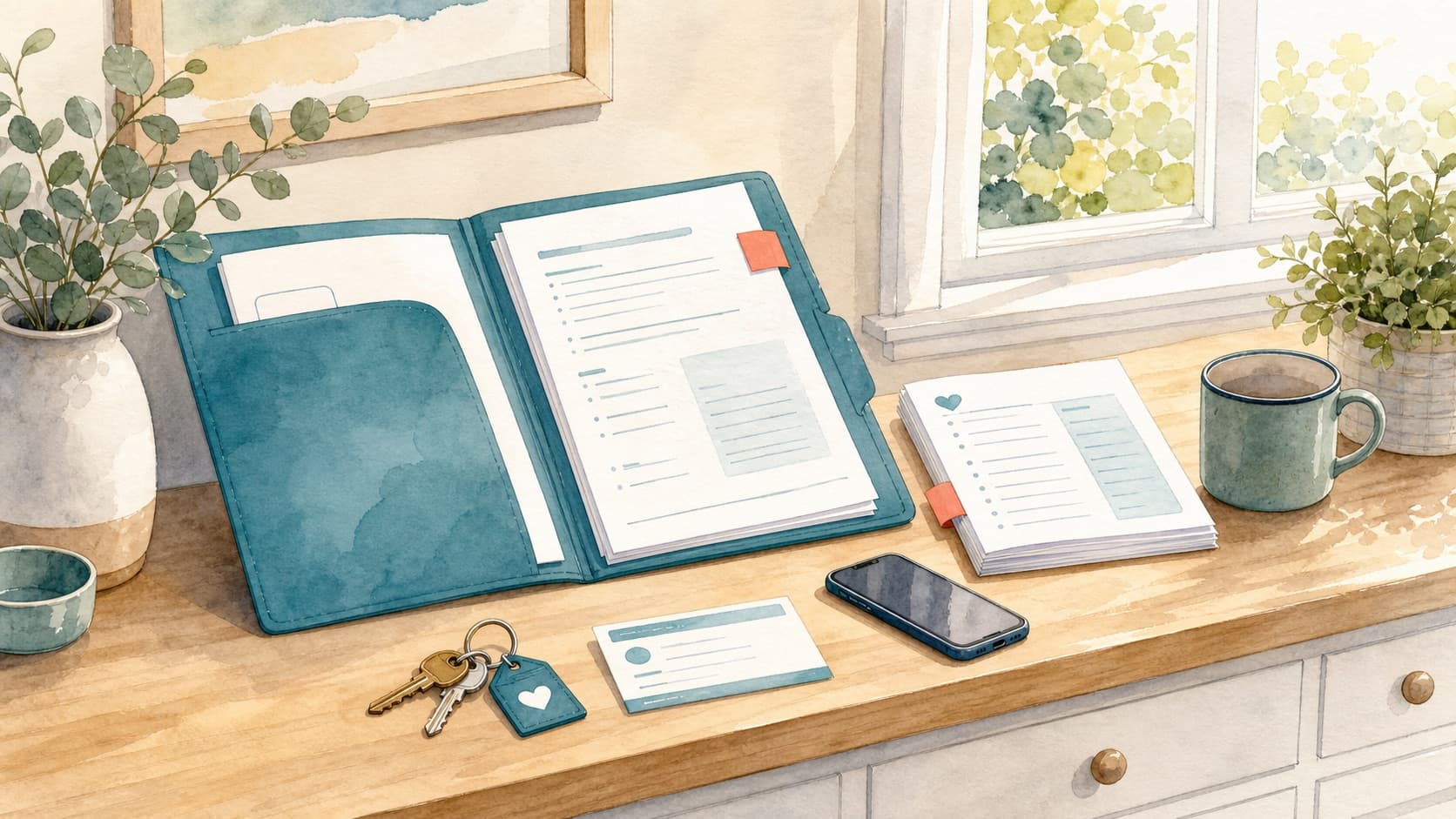
A useful backup plan is a paper or digital folder someone could pick up and use for the next few days.
- Essential details: full name, date of birth, address, Personal Health Number, and who to call first.
- Medications: medication names, doses, timing, pharmacy, and a photo of the current pill organizer if helpful.
- Medical contacts: family doctor, specialists, pharmacy, home and community care case manager, and health authority intake.
- Daily routine: meals, mobility, bathroom help, sleep, food limits, and what reliably calms or upsets the person.
- Decision-making documents: where to find a Power of Attorney, Representation Agreement, or other legal papers if they exist.
- Backup contact order: who to call first, second, and third if you are unreachable.
Do not wait for the perfect version. A rough folder is still better than no folder.
Find support for you and the person you care for.
Most families arrive here because something changed: a hospital discharge, a fall, caregiver burnout, a long publicly funded waitlist, or home no longer feeling safe.
Answer 5 questions and we'll check respite care, adult day programs, home care, and other supports that may give you a break.
Finally know what to do next.
At the end: local options, next steps, and a plan you can email or download.
Who are you helping?
5 questions · Free · No referral fees · No account needed
Who can step in if you cannot?
A backup plan needs both people and services, because one person may not be enough.
- A few-hour helper: a family member, friend, or neighbour who can cover an appointment or short break.
- A paid service: a home care agency that can cover a shift, day, evening, or weekend when family cannot.
- Respite for a longer stretch: in-home relief, adult day programs, or a short stay in a facility.
If the person you care for does not have a health authority case manager yet, ask for a home and community care assessment. Publicly funded home support and respite usually start there.
If you need flexible help faster, private home care may fill the gap. Rates vary by agency and care type, but a practical planning range is $35–$75 an hour. Confirm the actual rate with the agency.
What should you do this week?
This week, build the first version of the folder and ask one person to be your short-cover backup.
- Write the medication list and daily routine.
- Add doctor, pharmacy, case manager, and emergency contacts.
- Tell one reliable person where the folder is.
- Call one or two local home care agencies so you know who could cover a shift.
- Ask the health authority or case manager how respite works in your region.
For longer breaks, read our BC respite care guide. If you are making this plan because you are close to your limit, also read caregiver burnout signs and resources.
In a life-threatening emergency, call 911. For 24/7 nurse-assessed health advice in BC, call 8-1-1.
Sources
Frequently Asked Questions
Who can be a backup caregiver?
A backup can be a family member, friend, neighbour, or paid worker from a home care agency. The important part is that they know the routine and can find the care folder.
How do I arrange respite so I can travel?
Talk to the health authority case manager about publicly funded respite and how much notice is needed. For private care, contact agencies directly and book ahead.
What if I do not have family nearby?
Then paid and community services become the backup plan. Home care agencies, respite services, adult day programs, and caregiver support groups can all help reduce single-person risk.
How often should I update the plan?
Update it at least once a year and any time medications, doctors, routines, or decision-making documents change.
Ready to make a plan? Start the Navigator
Related Resources


Next step
Compare options near you
Move from the guide to local listings so you can compare care types, costs, contact details, and next steps in one place.
See local options